



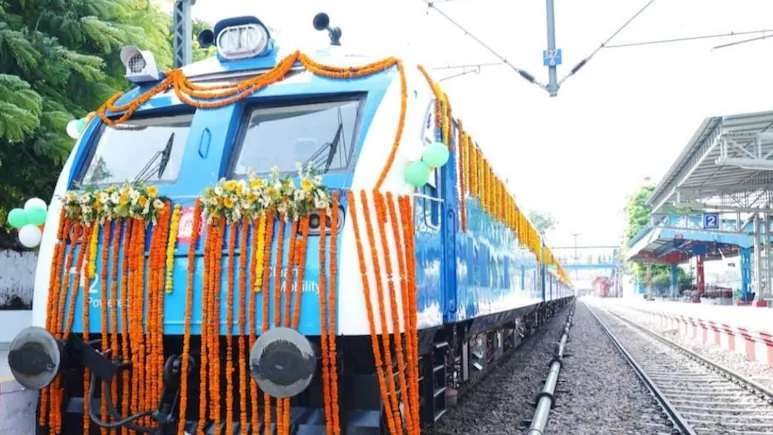
 New Delhi: India has entered a new era of green transportation with the launch of its first hydrogen-powered train, flagged off by Prime Minister Narendra Modi. The train will operate on the 89-kilometre Jind–Sonipat route in Haryana under the Northern Railway zone.
The project marks the first use of hydrogen fuel cell technology in the Indian railway network. The technology generates electricity through hydrogen fuel cells, offering a cleaner and more environmentally friendly alternative to conventional diesel-powered trains. The initiative also includes dedicated hydrogen storage and refuelling infrastructure.
Sharing the announcement on social media, Prime Minister Modi said India has joined a select group of countries that have adopted hydrogen-powered trains and described the development as a major step towards cleaner technologies in the railway sector.
Key Features of the Hydrogen Train
- 10-coach hydrogen fuel cell trainset
- Powered by a 1,200 kW hydrogen fuel cell propulsion system
- Maximum operational speed of 75 kmph
- Design speed of 110 kmph
- Passenger capacity of approximately 2,600 people
- Developed entirely from the design stage to prototype manufacturing in India
- Equipped with hydrogen storage and refuelling facilities
The train will connect Jind Junction, Gohana Junction and Sonipat, while serving several intermediate stations including Jind City, Pandu Pindara Junction, Lalit Khera Halt, Bhambhewa, Isapur Kheri Halt, Butana Halt, Khandrai Halt, Rabrah Halt, Lath Halt, Mohana, Barwasni Halt and Sonipat New.
Pilot Project for Sustainable Rail Transport
The hydrogen train has been launched as a pilot project to evaluate the viability of hydrogen-powered rail transportation in India. Railway officials believe the initiative will help reduce carbon emissions and pave the way for wider adoption of clean-energy technologies across the railway network.
India Joins Select Global Club
With the launch, India joins a small group of countries exploring hydrogen-powered rail systems, including Germany, Japan, China and the United States.
Germany was the first country to introduce a hydrogen-powered passenger train, the Alstom Coradia iLint, which entered commercial service as a zero-emission alternative to diesel trains. The country continues to expand its hydrogen rail network.
Japan is also developing its first hydrogen-hybrid train, known as Hybari, which is expected to begin operations by fiscal year 2027. In the United States, California introduced its first hydrogen-powered passenger train, Zemu, in 2024.
The launch of India’s first hydrogen-powered train is being viewed as a significant milestone in the country’s efforts to modernise railway infrastructure, promote clean energy and achieve long-term sustainability goals.
