



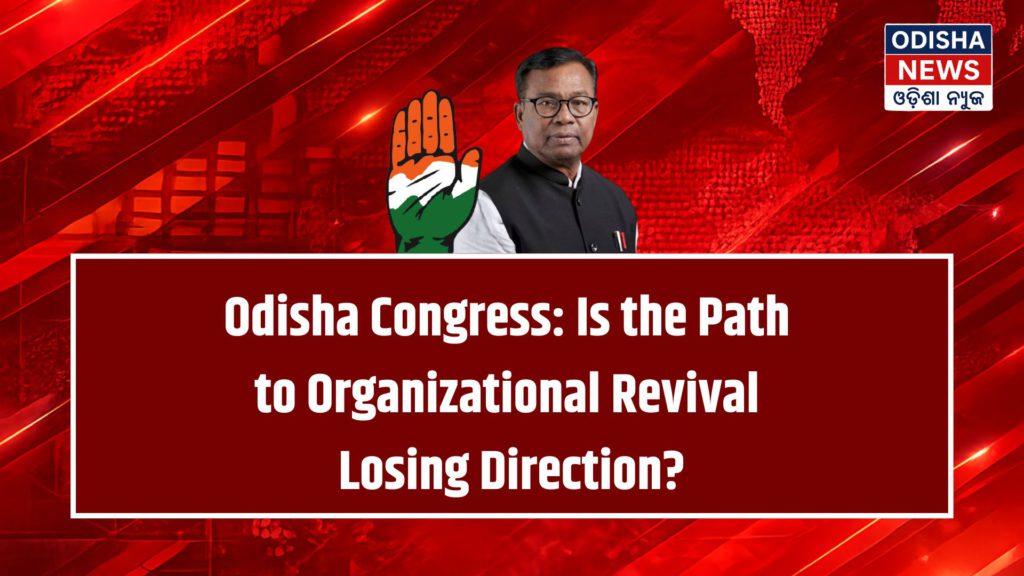
The Congress party in Odisha appears to be slipping back into familiar territory. Internal factionalism and leadership disputes are once again dominating discussions, raising concerns that efforts to rebuild the party’s organizational strength could be derailed at a critical juncture.
When Bhakta Charan Das was appointed President of the Odisha Pradesh Congress Committee (OPCC), expectations were high. The party leadership hoped that his experience and grassroots connect would help revitalize the organization, energize workers, and position Congress as a credible challenger to both the BJP and the BJD in the state.
However, months into his tenure, dissatisfaction within the party appears to have intensified. Several disgruntled leaders have alleged that the objectives behind his appointment have not been achieved. Instead of greater unity and organizational cohesion, critics claim that Congress has become increasingly fragmented under his leadership, with internal divisions growing more visible.
A key concern raised by party insiders relates to Das’s leadership style. Critics argue that his approach to decision-making has been highly personalized, leading to strained relations with several senior leaders. While disagreements are common in political organizations, persistent internal discord can weaken morale, reduce coordination, and distract the party from its broader political goals.
The situation has reportedly become serious enough that many senior leaders are said to be distancing themselves from party activities at Congress Bhavan. Such developments, if accurate, reflect a deeper organizational challenge that extends beyond individual personalities and points to a lack of internal consensus on the party’s future direction.
Reports of differences between Bhakta Charan Das and AICC General Secretary in charge of Odisha, Ajay Kumar Lallu, have further fueled speculation about the state of the party’s internal affairs. With Congress recently changing its Odisha in-charge, political observers are already debating whether additional organizational changes could follow.
That said, leadership change alone is rarely a complete solution. The larger question confronting Congress in Odisha is whether it can create a united platform where leaders, workers, and various factions can work toward a common political objective. Without organizational unity, effective communication, and collective purpose, even the most significant leadership reshuffles may fail to produce the desired results.
For the Congress party, the coming months could prove decisive. The challenge is not merely to manage internal disagreements but to focus on rebuilding grassroots structures, reconnecting with voters, and presenting a compelling political alternative in Odisha. Ultimately, a party’s revival depends not only on who leads it, but also on whether the organization can function as a cohesive and united force.
Note: The views and allegations referenced above are based on claims attributed to party leaders and political sources. They should be understood as part of an ongoing political debate rather than established facts.
