



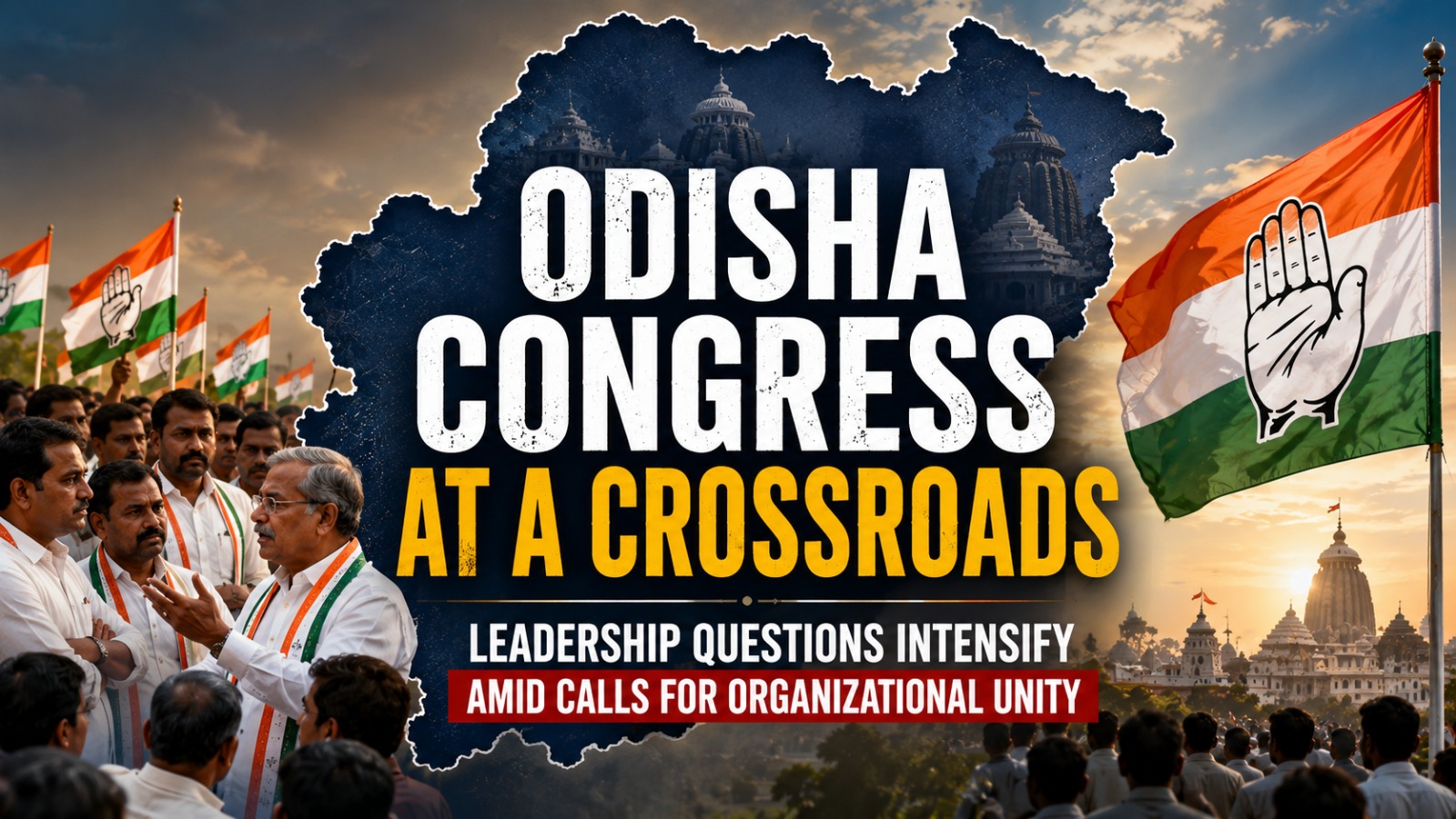
 Odisha Congress’ newly appointed in-charge, Lalji Desai, recently visited the state for the first time after assuming his responsibilities. The visit was considered significant for revitalizing the organization and strengthening communication with party workers. However, political observers noted that the participation of leaders and workers at the in-charge’s programs appeared lower than expected.
Reports of dissatisfaction regarding the party’s organizational functioning and leadership style have surfaced from time to time within the Congress. Several senior leaders and workers believe that the organization requires a more inclusive and consultative approach to leadership. During the visit, some leaders also reportedly expressed concerns about the current functioning of the state unit.
Questions have periodically been raised within the party regarding the leadership of Odisha Pradesh Congress Committee President Bhakta Charan Das. In recent months, demands for a change in the state leadership have been voiced at various levels of the organization. However, the party leadership has not made any official announcement on the matter.
At present, the Congress faces the challenge of uniting its state unit and strengthening the organization at the grassroots level. Rebuilding the party’s support base in Odisha is widely seen as requiring better coordination between the leadership, organizational structure, and party workers. The central leadership must therefore address how to resolve internal dissatisfaction while positioning the Congress as a stronger political alternative in the state.
According to political sources, the central leadership is closely monitoring developments within the Odisha unit and considering various options. While no decision has been announced, the possibility of organizational changes in the near future cannot be ruled out. Any final decision, however, will rest with the party’s central leadership.
For Odisha Congress, this is a period of introspection and restructuring. If the party succeeds in overcoming internal differences and moving forward with a shared vision, it could take significant steps toward strengthening its role in the state’s political landscape.
