



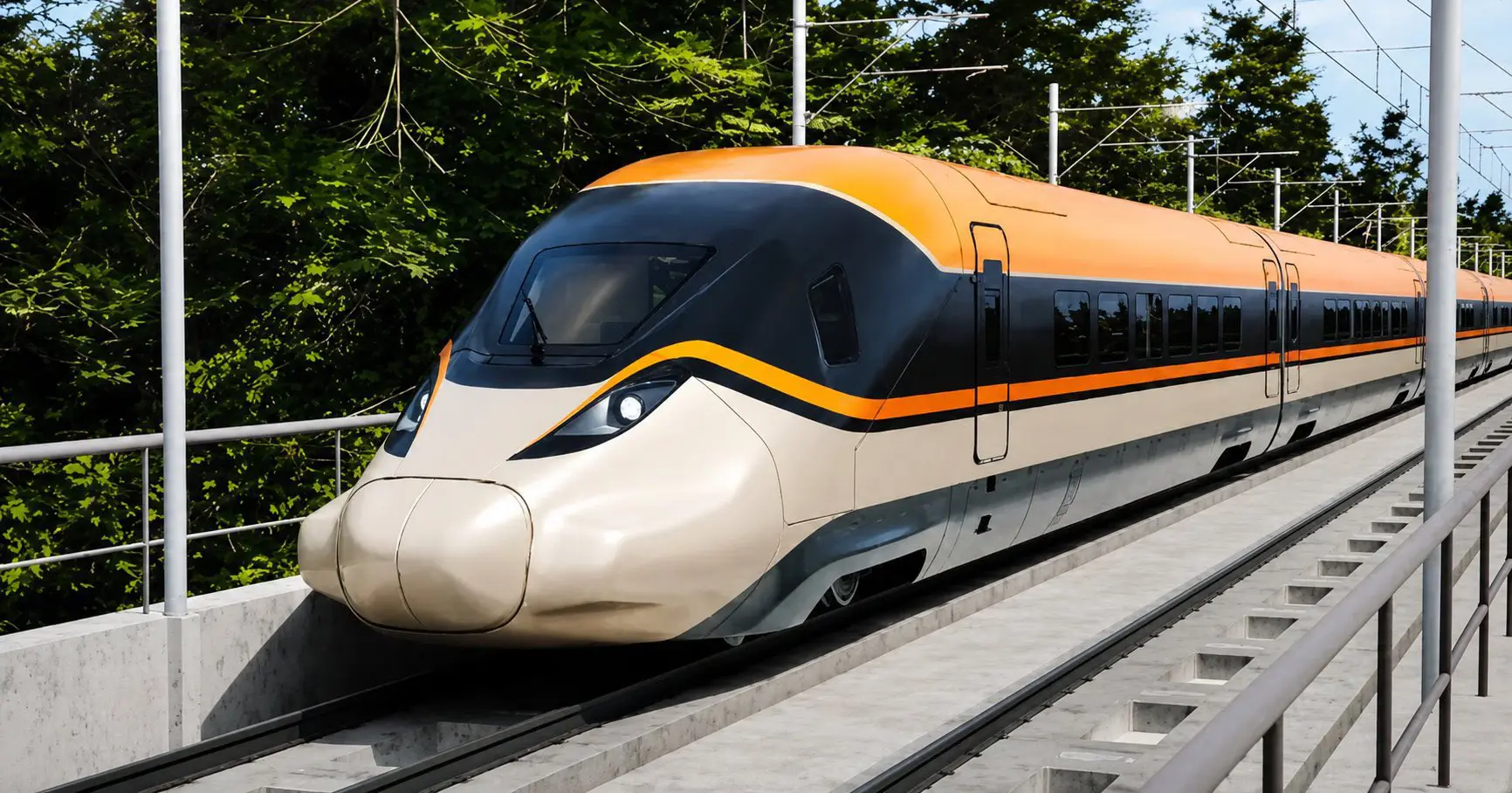
 New Delhi: India’s ambitious high-speed rail dream is moving closer to reality as the Mumbai–Ahmedabad High-Speed Rail (MAHSR) project, the country’s first bullet train corridor, approaches completion. The project is expected to serve as the model for future high-speed rail networks across the nation.
According to an official statement, the 508-kilometre-long corridor will connect Mumbai and Ahmedabad in approximately 1 hour and 58 minutes, significantly reducing travel time between the two major economic hubs. The bullet train will have a design speed of 350 kmph and an operational speed of 320 kmph, supported by state-of-the-art rolling stock, signalling, and train control systems.
The corridor will feature 12 stations and is expected to begin operations in phases. The first section between Surat and Vapi is likely to become operational by August 2027, marking the beginning of India’s high-speed rail era.
The government stated that the Mumbai–Ahmedabad project is not only a transportation initiative but also a foundation for developing the expertise, technology, and industrial ecosystem required for future bullet train corridors.
Officials said the project is creating a standardized framework that can be replicated across upcoming high-speed rail routes. This approach will help streamline engineering designs, construction techniques, operational systems, and maintenance procedures, making future projects more efficient and cost-effective.
India has already identified seven additional high-speed rail corridors, covering nearly 4,000 kilometres, for future development. These proposed projects are expected to attract investments of approximately Rs 16 lakh crore, significantly boosting infrastructure development and economic growth.
The standardized model developed through the MAHSR project will include common specifications for viaducts, tracks, station structures, electrification systems, signalling technology, and maintenance practices. While foundations will be customized based on local soil conditions, most other engineering components will follow unified standards.
According to the government, this strategy will accelerate construction timelines, improve quality, reduce costs, and simplify procurement and training processes across the future high-speed rail network.
Once operational, the bullet train network is expected to transform inter-city travel in India, improve connectivity between major economic centres, and contribute significantly to long-term economic and infrastructure development.
