



Tensions in the Middle East escalated on Wednesday after Iran launched several ballistic missiles at US military installations in Jordan, while the United States and Saudi Arabia carried out coordinated strikes against Iran-backed armed groups in Iraq.
The US military confirmed it had intercepted what it described as a “surprise attack” targeting its forces in Jordan. However, neither US Central Command (CENTCOM), Iran’s Islamic Revolutionary Guard Corps (IRGC), nor Jordanian officials have disclosed which specific military bases or facilities were targeted.
Around the same time, Saudi Arabia announced that its armed forces, working alongside CENTCOM, had launched strikes on Iran-backed groups in Iraq. According to Saudi officials, the operation was carried out in response to drone attacks on Saudi oil facilities. CENTCOM said the targeted groups had attacked US forces and Saudi energy infrastructure under the direction of the IRGC.
It remains unclear whether Iran’s missile attack on Jordan occurred before or after the US-Saudi strikes in Iraq, as CENTCOM has not provided a timeline clarifying the sequence of events.
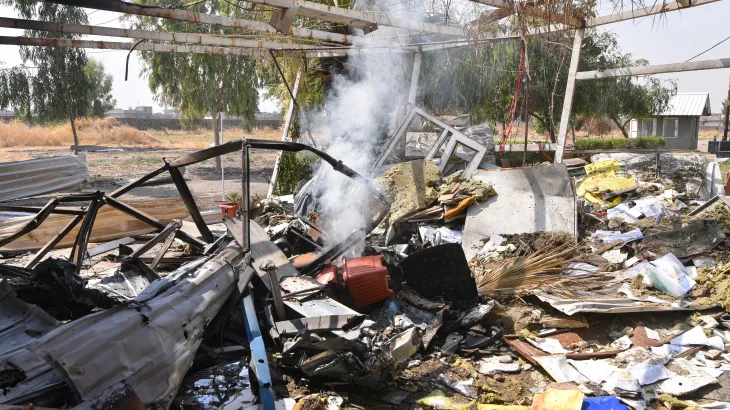
Iraq’s Popular Mobilisation Forces (PMF), a coalition of armed groups that includes several factions aligned with Iran, said the strikes killed at least 20 fighters and injured 32 others across seven provinces. The affected areas include Baghdad, Wasit, Nineveh, Basra, Kirkuk, Karbala, and Diyala.
The PMF described the casualty figures as preliminary, warning that the toll could increase as damage assessments continue.
The exchange of attacks has further raised concerns that the conflict in the region could expand beyond its current fronts, increasing the risk of a broader regional confrontation.
